
Building Diggn’It Led Me to AI
I did not arrive at AI through an abstract interest in technology. Ten years of running Diggn’It gave me the problems, data and operating pressure that made it practical.
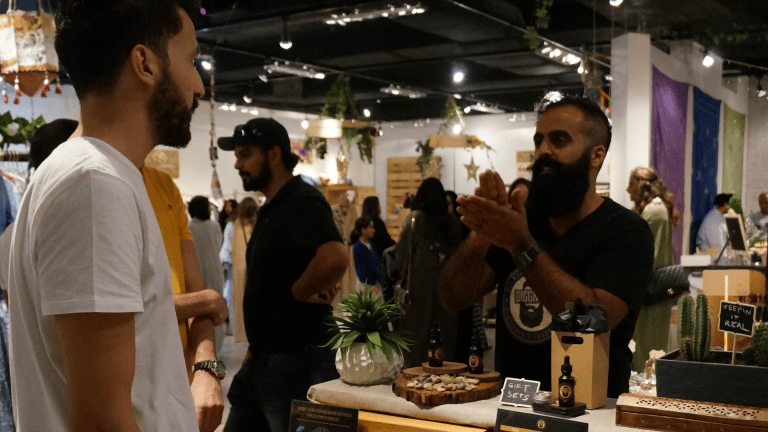
Nothing hurts more than throwing away expired products.
There was no single day when I discovered our inventory process was too fragile. The pain kept returning. We would notice that products were getting near expiry. Then some would get too close. Then some could no longer be sold. Eventually, we had to throw them away.
The product was wasted. So were the packaging, the storage and the work that had gone into making it, moving it and getting it ready for a customer. Then the loss appeared in the numbers.
That is where my AI story begins: with stock, batch numbers, expiry dates, purchase orders and the feeling that the business knew something was going wrong before I did.
Diggn’It gave me the problems that made AI useful.
A bottle created a chain of work
Diggn’It began with a beard, a bottle and a thought that felt obvious to me: Arabs and Saudis should have a beard-care company that felt like us.
We knew scent. We knew oils. Beards were everywhere. I had found beard oil and could not believe how excited I was to take care of my own beard. In my head, the business was almost complete before it started. Make the oil. Give it an Arab identity. Put it in a good bottle. Bada-bing, bada-boom.
I had no idea what I was looking at.
The company became real through people. Samya built much of the early voice and social-media rhythm. Our chemical-engineer partner carried formulation, production, logistics, shipping and much of the early supply chain. Friends and family smelled samples, put labels on bottles and helped with design, legal questions, costing and early systems. Then the first customer walked in and gave us money before I fully believed anyone would.
We made products at home. We filled bottles, tightened shrink wrap with a heat gun and lined the finished bottles up on the table. The house smelled like mint, oud, rose and amber. For a while, that manual work felt like the business.
Then every bottle created another question. What did it cost? How much raw material did we have? Who would make the next batch? Where would the stock sit? How would the customer pay? Who would print the airway bill and pack the order? When did an order become cash?
Cash on delivery taught me that an order was only a maybe. The phone could make the Shopify cha-ching, we could pack the parcel, pay for the delivery attempt and send it out. Then the customer could change his mind, miss the courier’s call or refuse the package. The product came back. We lost the sale and the shipping cost.
The notification sounded like success. The operating reality underneath it said something else.
I began to see the work below the product: people, payments, fulfillment, manufacturing, logistics, content, timing, cash and the trust holding all of it together. Every simple thing was a chain of smaller things.
Freedom had an operating model
Diggn’It was the first time I could wake up at home without somewhere else to go.
I did not have to go to work. I just had to work.
That freedom became more important after Samya and I had children. I wanted to be present while they were little. Diggn’It helped us spend time in Bali, Vietnam and Toronto while the company continued in Saudi. A laptop did not make that possible on its own. Partners, family, manufacturers, logistics providers, ecommerce systems and people on the ground carried physical work I could not do from another country.
If stock lived in our house, we could not leave the house for long. If only one person knew how to make a batch, the company depended on that person. If the process lived in my head, everyone had to wait for me. If a partner stopped answering, the business could stop moving.
The complications changed as we grew. Production moved out of the home. We found external manufacturing and fulfillment. Some stock sat in Dubai and some in Jeddah. Marketing stayed close because our voice was tied too closely to the customer and the culture to hand away casually. The company became remote, but the work did not become simple.
Everything was a process. Everything was a program. People needed to know what to do, what was expected of them, where the information lived and what happened next.
COVID exposed the weak parts of that structure.
People were at home, but they were buying. Our first fear was that demand would disappear. Instead, stock became the danger. Product and production were still tied to the Emirates while borders, paperwork, customs and movement were uncertain. We had customers, but we could see the day coming when we would have nothing to send them.
For the first time, we accepted orders before we could fulfill them. We offered a discount and told customers the truth: shipping would be delayed. Their purchases helped us cross the cash and stock gap until the product could arrive.
Customer trust helped us survive. The backlog still had to be fulfilled. Imports still needed documents. Shipments could still get stuck before Eid. Storage costs could still build. A logistics partner could still become unresponsive. Our appearance on Shark Tank gave the brand public validation, but television could not move a pallet through customs.
Local Saudi manufacturing eventually gave us a better path. It reduced import pressure and brought production closer to the market we served. The larger lesson stayed with me: a loved brand could still break when its hidden structure did not hold.
By then, the same questions were appearing across the company. Where was the stock? Where did an order go? Who owned the data? Who saw the exception? What happened when a document was missing? How early would we know? Who had to approve the decision? What broke when the person who usually caught the problem was asleep in another time zone?
Those questions led me to AI.
AI entered through the work
I first used AI for thinking. It helped me work through strategy, turn a foggy idea into something visible and organize what I was trying to say.
Then I used it in marketing.
Marketing was the easiest place to imagine agents because the work already looked like a team. A researcher studied the market. A strategist turned that into a calendar. A writer worked from our language and brand context. A design layer worked with assets. QA checked the output. A publishing layer prepared approved work.
The feedback loop mattered most. If I rejected an angle or said, “This does not sound like Diggn’It,” that correction could improve the next run instead of disappearing inside one piece of content.
Diggn’It is a marketing company at base as much as it is a grooming company. The products have to be good and the operation has to keep the promise, but the business moves because we understand how to speak to our customer. The workflow returned more of my attention to taste, direction, relationships and customer stories. Those still needed a person inside the brand.
Operations required a different approach.
Our ERP did not track batches and expiry dates in the way we needed. We exported a monthly sheet and updated expiry and batch information somewhere else. The ERP held one version of the truth. The sheet held another. The person running the process had to move between them, remember what mattered and notice the risk before it became expensive.
I first used Make.com and Airtable to make the workflow more visible. We could move information, update fields and build dashboards. It helped, but a person still had to go looking. A dashboard did not matter if nobody checked it.
Automation had moved the information without solving the attention problem.
The next question was whether we could own the data layer ourselves.
I did not come into this as a software engineer. I knew the business. I knew what kept breaking my attention and what I wished I could see sooner. AI made the technical door less locked. I still had to stay with the problem, ask better questions, test, break things and understand the workflow well enough to recognize a useful answer.
I started building a custom database and interface for the business. Inventory, sales, expiry dates, batch numbers, raw materials, lead times and purchase-order logic could begin to live in one connected system.
Marketing could be imagined as a group of agents. In operations, the system itself was the agent.
The database, rules and checks fed a Founder Inbox, the internal screen where alerts, exceptions and draft actions came to me for review. I did not need another chat window. I needed the business system to notice.
The purchase order on the screen
At the point I recorded this story for my book, the inventory workflow was live inside Diggn’It’s custom internal software. Its outputs were still approval-gated.
The inventory workflow became real while I was sitting at the computer and running a check.
The Founder Inbox surfaced the data, the logic, the action, the check and a purchase-order draft. I clicked the draft PO. An actual purchase order opened with the items that needed to be ordered.
The system had identified that a finished product was below its minimum stock level. It translated that into the production run required to replenish it, checked the raw materials needed for that run, compared them with the materials already in stock, and prepared a draft purchase order for what was missing. It also grouped the items for the supplier.
It did more than report low stock. It walked the chain.
My jaw dropped because this was someone’s job. Someone had to look at finished stock, work out the production need, check the raw-material requirements, see what was available and prepare the order. The system had brought that work to the final review.
I still checked it. I wanted to understand why it was recommending the action. I was not at the let-it-go stage, and the purchase order was not going anywhere without human approval. The business remained in my hands. I simply no longer had to hunt through every source before I could begin deciding.
The clearest change for me was attention. I still had to pay attention; I no longer had to spend it hunting for the decision.
That is what ten years of Diggn’It taught me to see. AI becomes useful when it moves a decision closer to the person responsible for it, with enough data and logic for that person to review.
The bridge to Waseem.Space
I am still running Diggn’It.
It remains the consumer and cultural company we built around Arab men, grooming, care, scent, self-expression and the idea of living your own vibe. The customers, products, suppliers, stock, marketing and production are present work, not a past case study.
Waseem.Space grew from another part of that experience. It is where I work with people and owner-led businesses on AI, data, workflows and internal systems without treating technology as a test of whether they belong.
I became comfortable staying with the troubleshooting loop. Diggn’It kept giving me reasons to stay: an expiry problem, a payment mismatch, a process that depended on memory, a repeated customer question, a decision that arrived too late.
That is why I start with the thing that feels stuck.
The person carrying the work already knows where it feels heavy, which question keeps returning, which report nobody trusts and which decision always arrives late. The first job is to slow that down and make it visible. Then the tool can help.
Building Diggn’It gave me a decade of work close enough to test what was real. I was able to look through the hype because I applied the work.
That operating experience is the bridge. Diggn’It is where the work is lived. Waseem.Space is where I help people make their own work clearer and more useful. My writing and public work under my own name connect the two. They come from the same place: problems I have had to stay with and systems we have had to build. Technology should leave a person more capable and less dependent.
Diggn’It is still the work in front of me. It is also what led me here.