

What Diggn'It Proves About AI Readiness: Make The Work Clear Before The Tool Gets Bigger
Diggn'It is a Saudi-made men's grooming and beard-care brand founded in 2016. As the business grew, the hidden work behind the brand became more expensive: support questions, content, campaigns, reviews, inventory, compliance, reporting, and channel coordination all needed better structure.
This case study shows the operating lesson that matters for your AI decisions: when the workflow is clearer, the tool decision gets easier, adoption gets more likely, and the business becomes easier to run.
Move Through The Business Under The Brand.
Select an operating layer, then switch between the pressure before and the system built around it. These are operating patterns and artifacts—not invented performance claims.
Decisions Returned To The Founder.
Sales, stock, orders, finance and daily execution lived across repeated checks and manual follow-up.
Growth Increased The Cost Of Manual Work
Diggn'It started as a founder-led brand and grew into a business with more channels, more customers, more support work, and more internal follow-up. The challenge was not growth alone. The challenge was keeping the work clear enough that the business could keep moving without every decision returning to the founder.
The Business Needed Less Drag, Not More Software
As the business grew, scattered tools and manual work created pressure across support, marketing, reporting, operations, and compliance. More software alone would not solve that. The business needed clearer workflows, better ownership, and operating layers the team could actually use.
- Manual work across multiple tools
- Slower support and customer follow-up
- Fragmented reporting and repeated checks
- Repeated marketing, content, and landing-page work
- Finance, reconciliation, inventory, and compliance overhead
What Was Built Around The Work
The response was to build systems around how the business actually worked, so repeated tasks became easier to see, assign, review, and improve.
Marketing Hub
AI-assisted workflows for content creation, translation, publishing, campaign planning, and ad execution with a clearer review rhythm.
Support Hub
Customer-support workflows across chatbot support, tickets, knowledge retrieval, reviews, and follow-up so common questions became easier to handle.
Ops Hub
A custom internal operations stack covering inventory, procurement, settlements, accounting support, reporting, and Saudi compliance workflows.
Custom Storefront Systems
Landing-page templates, public proof components, bilingual features, and localized e-commerce UX for Saudi customers.
Three Operating Layers That Reduced Repeated Work
The systems were not built as abstract technology projects. Each layer supported a real business workflow that had become harder to manage manually.
- Ops Hub made sales, stock, orders, finance, and daily execution easier to review
- Support Hub made common customer questions easier to answer and follow up
- Marketing Hub created a clearer rhythm for campaigns, content, and performance review
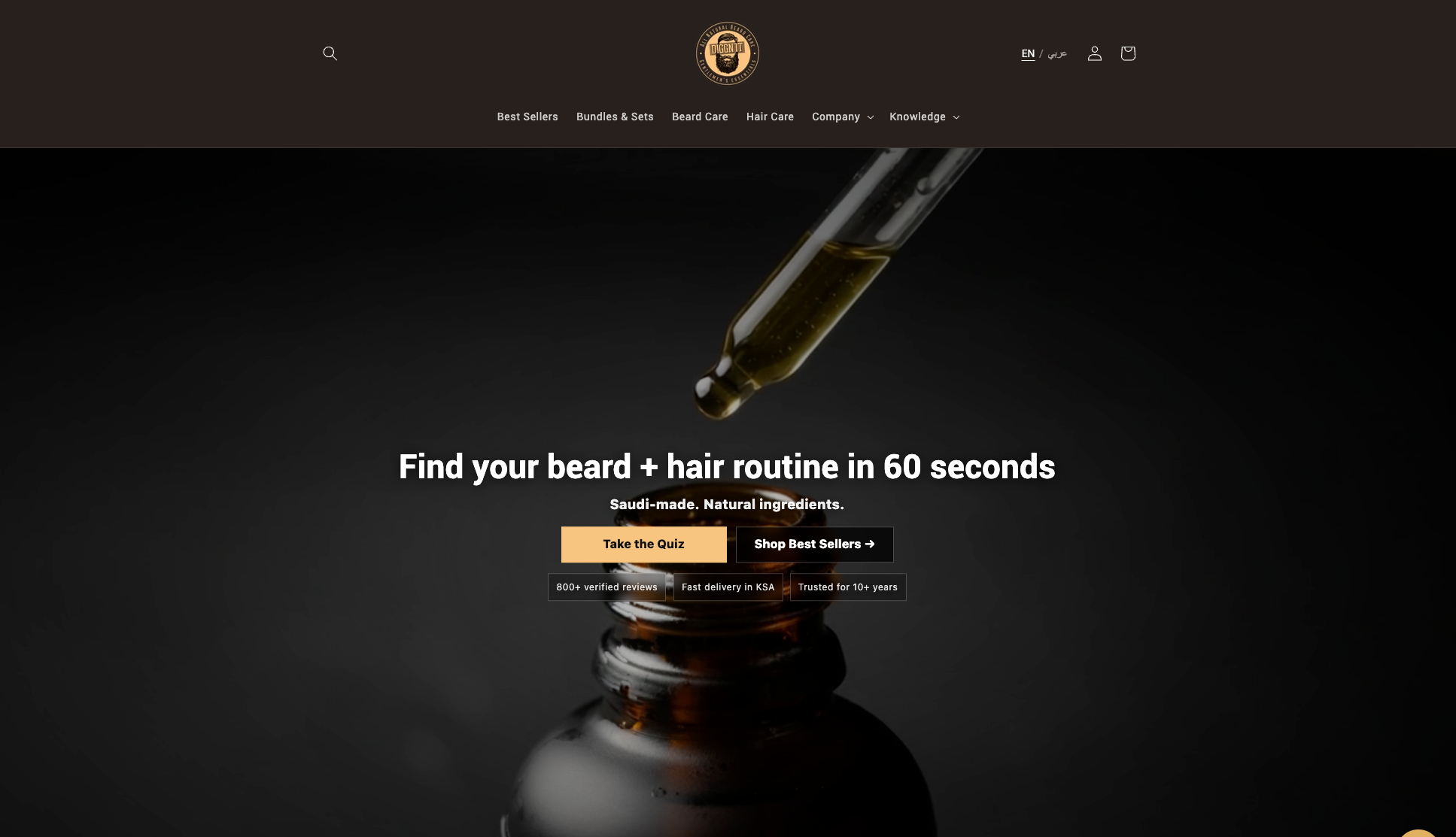
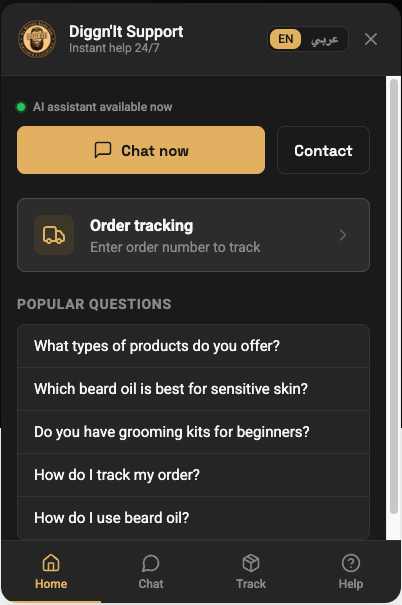
Ops Hub and Marketing Hub contain private operating and customer data, so their internal screens are not published here. The X-Ray above explains their workflow role without presenting conceptual imagery as proof.
This Is The Same Logic Behind Business AI Support
The work at Diggn'It is proof of the principle: before a business gets value from AI, it needs to understand where complexity is already costing time, attention, customer experience, and consistency.
- AI should improve a real workflow, not sit beside it as another tool
- The best use cases are usually close to repeated work, scattered information, and customer-facing friction
- A useful sprint should create assets the business can actually use after the work is done
If Your Business Has Similar Complexity, Start By Making One Workflow Visible.
The business diagnostic helps identify where time, decisions, customer experience, and manual effort are already being lost.